Luxury Tour Morocco
Tour Overview
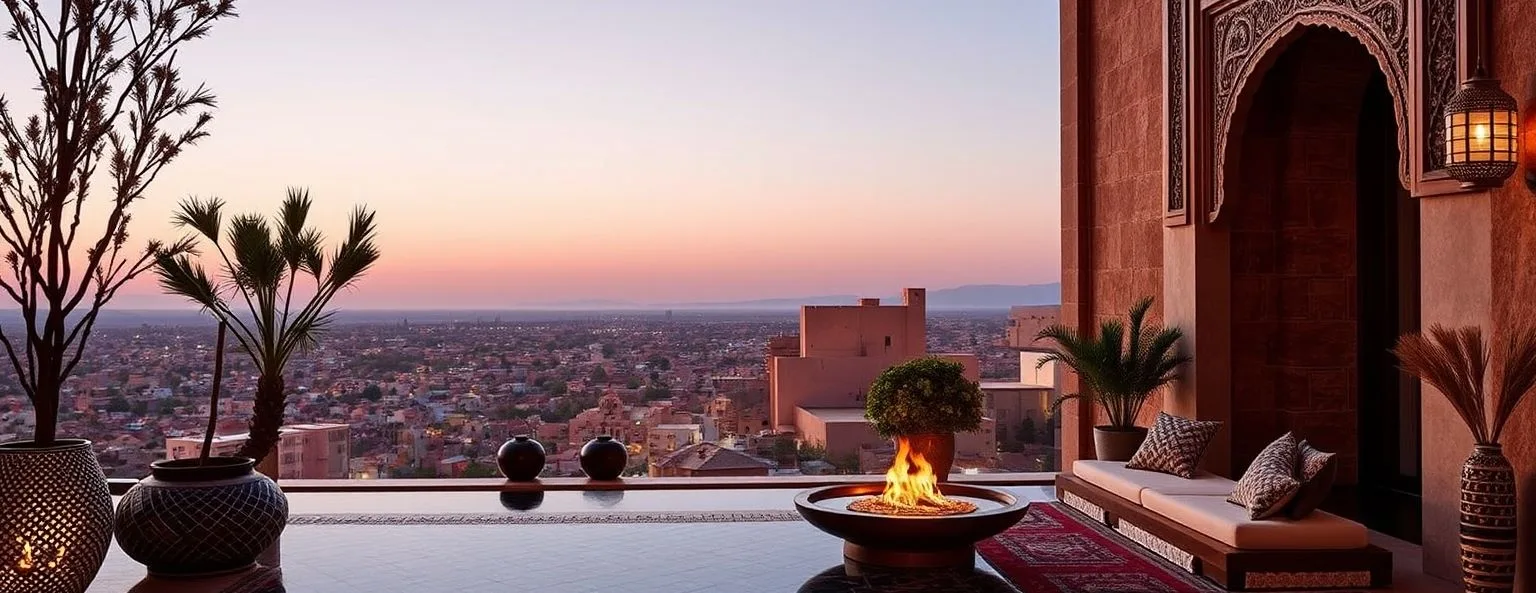
In Morocco, it is possible to combine the charming environment provided by Moroccan architecture with exceptional comfort and refinement. In this Luxury Tour in Morocco, you will go beyond ordinary mass tourism, with the ability to customize the itinerary with activities and experiences of your choice that will make this trip special.
Discover the most exotic corners of Morocco and enjoy the luxury accommodations we have carefully selected for you, prioritizing quality, location, and elegance. From boutique hotels that represent the culture of each place to Arab palaces that enchanted Sultans, Sheikhs, or historical figures like Churchill, whose favorite place in the world was Marrakech.
Allow yourself to be immersed in the Moroccan cities, which you can explore with the presence of a private guide with university studies dedicated solely to each of the cities. In addition to these local guides, you will have the continuous and attentive presence of a guide from Siroco Tours, ensuring that everything goes at your pace and accommodates your preferences throughout the trip.
This trip is based on 10 days, with the option to extend for 4 days to the Moroccan Atlantic coast, with new experiences and discoveries.
Day-by-Day Itinerary
Day 1 Casablanca - Rabat
Casablanca and Rabat
Arrival at Casablanca airport, where our guide will warmly welcome you in Morocco.
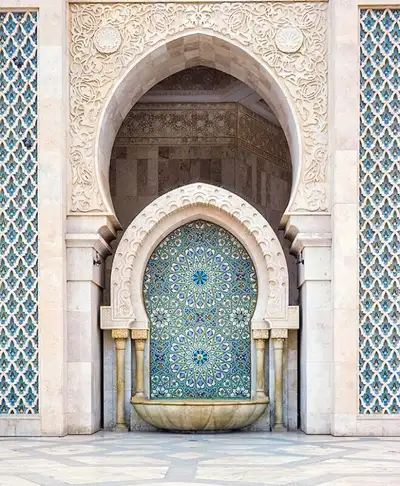
We will visit one of Morocco's main wonders: the Hassan II Mosque, the second tallest in the world and the only one in the country that can be visited by non-Muslims. There are guided tours where a knowledgeable guide explains all the details about the rituals of the Muslim religion and the extensive backstory of the construction of this monument.
In the words of the author of the book Morocco Country Study Guide, the Hassan II Mosque "undeniably marks the continuity of a modernized ancestral art and bears the sign of innovations that are due not only to technical reasons but also to a fertile exploration of new aesthetic possibilities."
You can also visit another splendid monument, the Mahkama du Pacha, an administrative building that served as a court, prison, and residence for the governor/parliamentary reception hall. Here, you can notice the French-Arab style known as Mauresque, with strong Moorish elements and a central courtyard that resembles that of a typical Moroccan mosque.
Soon after, we head to Rabat, a city that grew in the 14th and 15th centuries with the expulsion of the Andalusians from the Iberian Peninsula. It is surrounded by three walls corresponding to the most significant phases of its history: the Almohad wall, the Andalusian wall, and the Alaouite wall. Your guide will show you the walls and the main points of the city, such as the Hassan Tower, situated atop an imposing mosque, the opulent tomb of Mohammed V, amongst many others.
Day 2 Rabat – Volubilis - Meknes
Rabat, Volubilis and Meknes
During the morning, explore the Medina of Rabat freely to feel the Moroccan urban life and its colourful souks.
Walk through the Kasbah of the Oudayas, an ancient military fortress built in the 12th century, overlooking the Atlantic Ocean. The history of the site is visible through the monuments that make up the Kasbah, such as: its famous monumental gate (bab el-Kébir, one of the emblems of Almohad architecture); the royal residence of the Alaouite dynasty (still reigning); the Jamaa el Atiq mosque; the princely house built to the west; and the military structure of borj Sqala.
Next, we head to Meknes, and on the way, take the opportunity to visit the Roman ruins of Volubilis.
These ruins are an exceptionally well-preserved example of a large Roman colonial city. Volubilis marked the southern border of the empire and was the main Roman administrative centre in Africa outside of Egypt. You can take a guided tour in this area.
Sultan Moulay Ismail dreamed of making Meknes the most splendid city in North Africa. He was a contemporary of Louis XIV of France, trying to imitate the style of the French court. His interaction with the French king went down in history for having proposed marriage to his daughter. Therefore, Meknes is known as the “Versailles of the Maghreb.”
The night will be spent in a luxurious hotel, which is also a winery, inspired by French and Moroccan styles.
Day 3 Meknes – Fez
Wine Tasting in Meknes (at lunchtime)
The Meknes region is also the area of the country where wines made predominantly from highly regarded French grape varieties (Cabernet Sauvignon and Syrah) are produced, most of which are exported.
You can visit the winery and enjoy delightful moments tasting wine accompanied by an excellent lunch or just a snack.
Finally, we arrive in Fez, where you'll still have time to see the city in one of its glories, bathed in the soft afternoon light. We will take a brief panoramic tour of the city.
Day 4 Fez
The medina of Fez boasts over 9,000 streets that create a magical ambiance, where light and shadow intermingle. It is recognized as a UNESCO World Heritage site.
Fez once served as the capital of Morocco and bears the influences of the Fatimids, Andalusians, Arabs, and Jews. In the 13th century, Fez became a hub of knowledge and is home to one of the oldest universities in the world, the Al Quaraouiyine University. You can also visit the Madrasas (Quranic schools), the Jewish Quarter (mellah), and the exterior of the Royal Palace, with its seven majestic bronze doors.
The Craftsmanship of Fes
This remarkable city is renowned for its craftsmanship: leatherwork, pottery, copper, and metal. We will visit a tannery, where hides are treated and leather is crafted.
Day 5 Fez – Middle Atlas - Ifran
Fez, Middle Atlas and Ifran
We will depart in the morning to visit the magical cedar forests of the Middle Atlas, where you will be dazzled by the spectacular native nature. The atmosphere is calm, clear, and rich in the aromas of nature.
Explore the **natural park**: in the Middle Atlas, there are springs and waterfalls, flanked by small traditional Berber villages. Several lakes are scattered throughout, where you can walk or take a pedal boat ride. There is also a farm producing homemade cheese, where you can enjoy a snack along with the organic honey produced on-site.
For the more adventurous, there are marked forest trails for mountain biking and quad biking (4×4 motorcycles). Take advantage of the chalet-style hotel in this stunning location, where you can experience a hammam (traditional Moroccan spa).
Day 6 Ifran - Ziz Valley - Rissani - Merzouga Desert
We will depart in the morning towards Merzouga. During the journey, you may spot monkeys and other animals typical of these forests.
Ziz Valley
On the way to the desert, we will cross one of the largest oases in the world, where you can taste the dates that are cultivated here. The date is a highly nutritious fruit, consumed by the local people for its richness in vitamins and proteins.
Take a stroll through the palm forest along the river, leading to the ancient ksars. The tranquility of being in this palm grove is like being in the desert, yet surrounded by lush and harmonious nature.
Rissani
Next, we will visit Rissani. This city is known for its iconic main gate and its traditional weekly market (souk) brimming with craftsmanship. The souk is open every day, but it is livelier on Tuesdays, Thursdays, and Sundays. You’ll feel as though you’re entering an epic medieval film, a truly authentic place with surprising products, including a donkey market!
Merzouga Desert
For those craving adventure and sports activities, you can enjoy quad biking or sandboarding on the desert dunes. The tours can range from 1 to 6 hours and are ideal if you want to deeply explore the Merzouga dunes, a UNESCO World Heritage site.
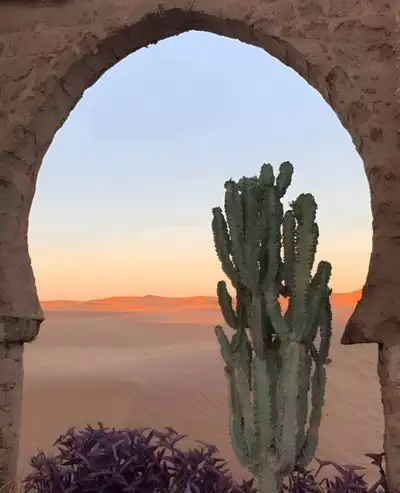
Surprisingly, the desert is not a monotonous place: there is a chromatic variation every hour of the day, and the colors of the sunset on the Erg Chebbi dunes are a photographer's delight. Embark on a camel ride for about an hour until you reach the camp where you will spend the night. Watch the sunset from the top of a dune: a perfect opportunity to capture unique colors reflected in an endless sea of sand.
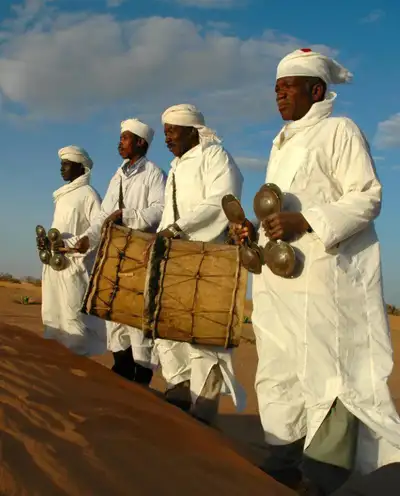
You will spend an unforgettable night under a constellation of stars in the clear sky. At the luxury camp, dinner will be served, followed by traditional drum music around a campfire. Finally, the silence of the night falls, and the only sounds you will hear are your own voice and those of the ones around you. This environment invites introspection and meditation.
Day 7 Merzouga Desert – Todra Gorges – Dades Valley - Skoura
After a relaxed breakfast and witnessing the breathtaking sunrise over the dunes, we will visit the Todra Gorges, where the cliffs rise to 300 meters in height, separated by just 15 meters. There will be time to enjoy a walk along the river, surrounded by the grandeur of this unique and rocky landscape.
The Dades Valley combines arid mountains similar to the desert and, at the same time, fertile nature where the sounds of birds can be heard. It is considered one of the most stunningly beautiful locations and of great geological interest.
You may also see Jbel Saghro, a mountain even drier than the others in the range, with a landscape often compared to the surface of the Moon.
We continue along the "Route of the Thousand Kasbahs" towards Kalaat Mgouna – The Rose City. A Kasbah is an ancient fortress-like structure, and even the word "castle" has its origins in the word "Kasbah."
Day 8 Skoura - Ouarzazate – Ait Ben Haddou – Marrakech
Ouarzazate is known as the "Gateway to the Desert" due to its location between the Atlas Mountains and Sahara Desert. In addition to the stunning scenery, you can visit the Kasbah Taouirt, an ancient fortress, the palace of Pasha Glaoui, near the Medina, and the famous film studios that have hosted several historical films, including the iconic Lawrence of Arabia.
Ait Ben Haddou is the most important site along the "Route of the Thousand Kasbahs" and is classified as a UNESCO World Heritage site. It has also gained fame for serving as a filming location for many Hollywood movies, such as The Mummy, Gladiator, and Game of Thrones.
Day 9 Marrakech
During the day, a guide dedicated solely to the city of Marrakech will accompany you to make the most of what this city has to offer, exploring its history and the atmosphere of fantasy and surprise that Marrakech always exudes.
The monuments to visit are numerous, including the following highlights:
**Madrasa Ben Youssef**: This 12th-century Islamic school in Marrakech was commissioned by Sultan Ali ibn Yusuf of Morocco. Today, it is a museum open to visitors. The interiors are magnificent, all beautifully decorated, and the architecture is stunning.
**Koutoubia Mosque**: Undoubtedly, the most famous and most photographed monument in Marrakech. The Koutoubia Mosque was built in the 12th century and served as the model for the Giralda in Seville and the Hassan Tower in Rabat.
**Bahia Palace**: This beautiful 19th-century extravagant palace was built to be the finest in Marrakech. The palace features a large garden, a central courtyard, and several rooms incredibly decorated with the work of artisans who came specifically from the city of Fez to work here.
Day 10 Marrakech
**Majorelle Gardens**: This is the only botanical garden in Marrakech. It was designed by artist Jacques Majorelle and has been owned by Yves Saint Laurent and Pierre Bergé since 1980. You can enjoy a wonderful garden filled with exotic flowers from various parts of the world.
Yves Saint Laurent Museum, which features a permanent collection as well as temporary exhibitions showcasing masterpieces from this famous designer. The building itself has charming modern architecture with traditional touches.
Palais Dar Bacha, or the Musée de Confluences, a magnificent example of Arab architecture. It has a very special café where you can taste coffee from around the world in a delightful setting.
The modern neighborhood of Gueliz, which blends perfectly with the spirit of the city.
Optional Trip
Day 11 Marrakech – High Atlas - Imlil (Extra Day)
The Imlil Mountains in the High Atlas are covered in snow during the winter, with flowers in the spring, fruit in the summer, and red-tinged leaves in the autumn. Regardless of the time of year, the High Atlas is always picturesque.
There are several ways to spend an unforgettable day: you can visit a traditional Berber village, have lunch with a local family, take a mountain hike with a trekking guide who knows the most beautiful trails in the Atlas, among other activities.
Other points of interest in this area include Lake Takerkoust, Mount Toubkal (the highest in North Africa), the Kik Plateau with its breathtaking landscapes, the Ourika Valley, and the Setti Fatma waterfalls.
Day 12 Imlil - Essaouira (Extra Day)
This coastal area, since the time when Carthage was an empire, has always been considered one of the best anchorage points in the North African Atlantic. The first signs of significant commercial activity date back to the 11th century, but it was in 1506 that the city would see one of the most important chapters in its history, when it was conquered by the Portuguese, who built the fort that still stands in the city today and named it Mogador.
Essaouira Medina: UNESCO World Heritage
Day 13 Essaouira - Safi - Oualidia (Extra Day)
Safi is a beautiful coastal city, which, although it has a castle and an ancient cathedral from the Portuguese era, is better known as the ceramics capital of Morocco.
In Safi, you can visit several pottery workshops, painting studios, and their respective kilns. The National Ceramic Museum is housed in a large building on one of the city's hills.
Oualidia
This city is mainly known for its beautiful beaches, with a crescent-shaped bay and golden sand dunes. The colors of the beach and surrounding areas change according to the time of day, creating incredible scenic effects.
There are boat trips with private picnics on deserted beaches, where you can visit the oyster bay of Oualidia. For wildlife enthusiasts, there are birdwatching safaris in the area.
At the end of the day, enjoy the sunset while savoring the famous local oysters, considered the best in Morocco and among the best in the world, accompanied by a glass of white wine by the lagoon.
Day 14 Oualidia - El Jadida - Casablanca (Extra Day)
El Jadida
This small port city, once controlled by Portugal, is now a UNESCO World Heritage site. Formerly known as Mazagan, the city features a Manueline cistern (built by the Portuguese in 1514 to store water) and is one of its main attractions. You can also spot the Chapel of St. Sebastian and the recently restored facade of the Church of Our Lady of the Assumption, a Manueline-style church.
We continue to Casablanca, where our journey comes to an end.
Interactive Route Map
What's included
✓ Inclusions
- • Arrival and departure transfers to the airport;
- • Private transportation throughout the trip in a new, safe 4×4 or Minivan with air conditioning. All our cars are tourist-licensed by the Moroccan Government and have insurance for our clients;
- • Dedicated English-speaking guide throughout;
- • Accommodations throughout the trip, with breakfast included;
- • Dinners in Ifrane, Merzouga Desert, Skoura, and Asni;
- • Additional official guide in the cities of Marrakesh, Meknes, and Fes;
- • 1 night in a luxury Berber nomadic tent camp;
- • Scenic camel ride to reach the camp.
✗ Exclusions
- • Drinks and other meals (lunches and snacks); Entrance fees to monuments.
Other Suggested Itineraries
Frequently asked questions
Is this tour fully private?
Can I customise this itinerary?
What is usually included?
Where do tours usually start and end?
How do I book?
Theresa TripAdvisor
Verified review“What a great private tour! My family and I had an amazing experience in Morocco. The itinerary was perfect — we loved the scenery and how different each city felt. The van was comfortable and Radouan was an excellent guide; by the end he felt like family. I will recommend Siroco to friends and use them again.”
Patricia B Porto Alegre, RS
Verified review“We took a 10-day family trip through Morocco with Siroco Tours. Impeccable service, from pre-trip support with recommendations and tips, answering questions via Whatsapp. During the trip there is always a guide speaking Portuguese or "Portunhol" accompanying us, the selection of hotels is also wonderful. I highly recommend their service...”
Hwang J TripAdvisor
Verified review“It is impossible to put into words the experience I had in Morocco — as if I had rubbed Aladdin's lamp! I travelled alone and when I arrived in Casablanca, Jamal from Siroco was already waiting with a beautiful smile. Siroco planned the itinerary, the riad reservations and everything I wanted. I felt totally safe the whole time. Thank you Alexandra, Jamal and Rachid — Inshallah I will return in 2028!”
Verified review“Our experience with Siroco was the best possible. A friend had a serious health problem right at the start of the trip and they provided everything necessary to solve it. Without their help we would not have succeeded. They stood by us as true partners and, above all, as kind human beings. Rachid, Alexandra and the team — thank you for everything. I highly recommend discovering Morocco with Siroco!”
Verified review“An unforgettable 10-day tour through Morocco. Our guide Mustafa was exceptional — knowledgeable, patient and always attentive. The itinerary was perfectly balanced between the imperial cities, the Sahara dunes, the Dades Valley and the blue streets of Chefchaouen. The riads chosen by Siroco were beautiful and authentic. Worth every moment!”
Send us an email!
Please fill out the form. We will respond as soon as possible.